Friday, March 13, 2009

Honest Pint in Salem

Beervana blogger Jeff Alworth's Honest Pint Project is gaining some serious traction. A new bill has been proposed that would require inspections of pubs and would certify their compliance with a true 16oz pint rule with a official decal (I imagine one like the state health 'complied' and 'exceeded' stickers for restaurants).

Though as an economist I support the Honest Pint Project, I do not support this legislation. I think it is costly, requiring inspections; I think it is not entirely effective, there are plenty of opportunities for cheater pints; and I think there is a better solution.

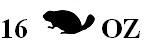
My solution has always been to do what the Brits do: require marked glassware like in the picture. Glassware suppliers can certify the volume and etch it on the glass itself. It is a lot easier to monitor a few glassware suppliers than hundreds of pubs and restaurants and etching adds very little to the extra cost of glassware (and can be phased in to save a big one-time cost to pubs and restaurants). Besides, having an Oregon state seal on a glass certifying its volume would be cool!


The reason I support this remedy is because it addresses the essential market failure: asymmetric information - drinkers do not know the volume of the glasses their beer is served in. Once full information is restored, the market will do the rest.

One More Comment About the Beer Tax

Usually taxes such as these are proposed to address some external costs. But the problem with making the leap from a beer tax to alcohol and drug abuse (and related crime and treatment) is that this is an external cost only associated with a small minority of beer drinkers. In fact as I mentioned in my earlier post, moderate beer consumption may actually cause a positive externality, suggesting (economically) government may wish to subsidize moderate consumption.

Other taxes are different. Take a gas tax, there is a large and recognized cost associated with the release of carbon into the atmosphere and it doesn't matter how much you drive, when you drive or how fuel efficient your car is - the carbon content of a gallon of gas is the carbon content of a gallon of gas. When you consume a gallon of gas in any manner of use, the cost to society is the same. Thus a tax on gas is purely Pigovian. We all pay a price that reflects the costs we impose on society.

Not all sin taxes are like beer taxes, the effect of cigarette smoke are harmful for even moderate smokers and also for those around them. So a tax is much more efficient in addressing the external costs here. But Beer is simply not the same thing. As a occasional and very moderate drinker of beer I impose no external costs - so making me pay a higher price is not Pigovian but simply an arbitrary, and distorting, tax.

Thursday, February 12, 2009

Beer Tax

Sin taxes, taxes on things like alcohol and tobacco, are often justified economically as Pigovian because of the adverse health effects that create costly demands on the state-supported medical system. There is a mountain of evidence suggesting that cigarette smoking has severe adverse health effects and these smoking-induced maladies create large costs for the state, so taxes on cigarettes appear to be pretty well-founded (the appropriate level is still a matter of much debate - especially since the effects of secondhand smoke may be much larger than was once thought).

But can beer taxes be justified along the same lines? There is a lot of evidence suggesting moderate consumption of beer is actually good for your health. But there are also negative health benefits from alcohol dependency and both the health effects and the behavioral effects impose costs on the state. But I would argue that beer is not the main culprit (I would at least like to see evidence that it is) for alcohol dependency. Furthermore a selective tax on beer would simply shift alcohol consumption to other forms of alcohol (potentially more potent ones) which would not solve the problem. So I don't find much of a convincing economic rationale for a beer tax.

So the news that the Oregon Legislature is considering, once again, a bill to raise the tax on beer is disheartening. Just because it is politically expedient does not make it right. The justification of the bill is appalling: alcohol and drug addicts create huge costs for Oregon, yes, but just because you can't tax illegal drug use doesn't justify harming one of the few bright spots in the Oregon economy by placing the burden of drug and alcohol rehabilitation on beer consumers and producers. Beer brewing in Oregon is still a relatively small part of the economy, but it is growing and, according to the Oregon Brewer's Guild, represents about 5000 jobs.

At a time when we are trying to stimulate the economy, raising taxes is counterproductive and this one particularly so.

Monday, February 2, 2009

Beer Prices and Signalling

The discussion about beer pricing strategy continues at the Beervana blog with an interesting comment from one of the pre-eminent beer retailers in the nation: Belmont Station (no longer on Belmont, but why quibble?). Here is an interesting tidbit:
Some breweries (like Rogue) are quite proud of their beer, and regardless of
whether or not Dead Guy cost significantly more than Inversion they want to
project an image high quality, expensive beer, so they price it higher.

Nobel prize winner Michael Spence won his prize for developing the theory of signalling. The idea is this: if you are a high productivity person (because perhaps you are especially smart), how to you credibly convey this to a prospective employer. You can't just say "I'm very smart" because if this increased the likelihood of you being hired or getting a higher wage, everyone would say it even if it were not true. So you have to find other ways to let them know, or 'signal' your type. One way to do this is to obtain more education. This works because acquiring this education is easier for those that are smarter. Less smart individuals will decide not to invest in education, because it is costly and, after employed, employers learn your true type. So in equilibrium there is a natural sorting, smart people get educated and less smart people don't and, here is the punchline, employers can use education as a real measure of smarts.

[By the way I tested this model (with Mike Conlin now at Michigan State) using new players in the NFL and found that players with some private information about their ability can signal this through holding out and delaying agreement on a contract. The idea is that missing some training camp is more costly for less able players than for more able players.]

This basic model has been translated into advertising. Why do some manufacturers spend a lot of money on ads that tout the superior cleaning ability of their laundry detergent? Any manufacturer can claim this but consumers figure out whether this is true. Since what manufacturers of laundry detergent want is to get customers to become loyal to their brand, if spending a lot on ads does not get consumers to keep coming back, it is pretty wasteful relative to those brands that do get consumers to become repeat customers. Thus, again, there is a natural equilibrium, high quality brands will do a lot of advertising and lower quality bands will not and, again, the punchline is that the ads themselves are credible signals of the true quality.

What does this have to do with beer? Well, if Chris of Belmont Station is right, high price is itself a signal of true quality. Since consumers figure out beer quality by trying it once, price itself may be a reliable signal of the quality of the beer. To put it another way, if consumers didn't think Rogue was exceptional beer, they could not get away with their high prices, so the fact that they can is a signal that they do indeed make exceptional beer.

So it is not necessarily just a matter of projecting high quality, but informing consumers about quality as well...

Friday, January 30, 2009

Why is Beer not Priced According to Cost?

Over on the Beervana blog, Jeff asks an interesting question about beer prices. No doubt his readers will flub the economics badly, so I expect astute economic analysis here.

The question is this: why do we typically see beers of the same brand all priced the same even though it typically costs a more to produce some beers than others, like an IPA versus a Pale Ale?

Part of this can be explained by supply and demand, but I don't think demand systematically falls the more ingredients a beer uses (then again, maybe it does - as you make more and more flavorful beers, perhaps the demand curve falls as fewer and fewer people like them). So there must be something about brand and consumer psychology. My guess is that stores have found that if one Deschutes beer (Inversion IPA) is priced above others (Mirror Pond), few people buy the higher priced one.

Thoughts?

Tuesday, January 20, 2009

In a Tight Economy, Is Doing it Yourself a Good Idea?

It has been years since I brewed my own beer, but recently my son asked me the question I have been waiting a long time to hear: "how do you make beer?" "Well son," says I, "I'll show you." So off we set to FH Steinbart to load up on supplies.

[I had in mind something modeled on Ninkasi's Total Domination, which without a doubt is the best beer brewed in Oregon and possibly the country. On this I am sure there will be no debate. And by the way has Ninkasi, in a short time, become the best Oregon brewery? I think it might. Kudos to Jamie Floyd.]

Anyway Steinbarts on Saturday was absolutely crammed with people buying supplies. Unfortunately I was after Centennial, Cascade and Chinook hops to make a classic 'Three C' IPA but the Chinooks were gone. Thoughts of substituting Willamette, Newport and Zeus were also dashed, so I decided to pitch a curveball: up the hops (to compensate for the lost alpha acids) and use Mt. Ranier instead. I'll let you know how it turns out. But the point is that this economic naturalist started to wonder whether, as incomes get strained, people start to make their won rather than buy it in the bottle. Does it make sense to do this in tight economic times?

Let's do some back-0f-the-envelope calculations. To get all the ingredients for my beer, plus a few sacks for the grain and hops but basically nothing else (including bottles and caps) I spent about $65. Blame the hops which are not only scarce but expensive. I had some leftover ingredients and I have all the other equipment from before so we will consider it a sunk cost and ignore it. So let's say $60 for the ingredients. From this I make a five gallon batch and I will probably yield about 4.5 gallons after ditching the sediment - maybe less because I dry-hopped - and then some spillage due to inevitable personal blundering, so let's say 4 gallons at the end or about 7 six-packs or 23 22oz bottles.

A six pack of good beer is about $7-$8 in my local supermarket. So the retail cost of this beer is about $50. If I manage something sublime perhaps I can compare to Total Domination which costs about $3.30 for a 22oz bottle, so my beer would retail for about $75.

On a broad scale then, the cost of the ingredients are about equivalent to the retail price of the finished product. Include the opportunity cost of my time, the certainty that my beer will fall far short of Ninkasi's and the extremely high probability that I will have managed to acquire an unwelcome bacteria that gives my beer an off flavor, and it seems clear that brewing your own is NOT a way to save money.

The crowd at Steinbarts could still be an indication of a bad economy: many people with unwanted time on their hands might turn to brewing which is a nice hobby and also has the appealing aspect of providing a large amount of alcohol at the end.

This calculation is, by the way, why I have largely stopped brewing: for about as much money as brewing my own I can get super-fantastic beer in many varieties and I don't have to wait for it.

Wednesday, January 7, 2009

Complements: Beer and Cigs

OK, so I had to find some excuse to post this picture which is all over the Oregon beer-o-sphere. It is Don Younger striking a familiar pose on the last day smoking in bars was allowed in Oregon. How will the ban affect Oregon's bars, pubs and breweries?

Matthew Engle in the Financial Times, writes that beer sales in Britain have declined 10% since the smoking ban was imposed there. Why should this be so? It is certainly true that the two, beer and cigarettes, are complements and so increase the cost of one [smoking is more costly because you have to go outside and do it] and the demand for the other falls.

Will this have as big an effect in Oregon as in Britain? I think it unlikely as most of the ever-so-popular pubs and brewpubs are generally non-smoking establishments anyway. But I do imagine that some small bars could find business down. I guess the bigger question is: given that there are many alternatives to patronizing and working in non-smoking establishments, is the ban necessary? The free market side of me suspects not. But the ban is no so much about this, I assume, as about public health and the cost of caring for smokers later in life. If this ban manages to reduce overall cigarette consumption, then it could easily save the state a lot of money down the road.